Understanding the essential do and don’t in Koh Yao will help you enjoy
a safer, more respectful and more meaningful island experience. Located in Phang Nga Bay,
Koh Yao Yai and Koh Yao Noi are known for peaceful beaches, traditional fishing communities,
coconut plantations and a slower pace of life.
Koh Yao is different from Thailand’s busy party islands. Local traditions remain an important
part of daily life, and many residents belong to Muslim communities. Visitors are warmly
welcomed, but responsible behavior is expected when exploring villages, beaches and surrounding
marine environments.
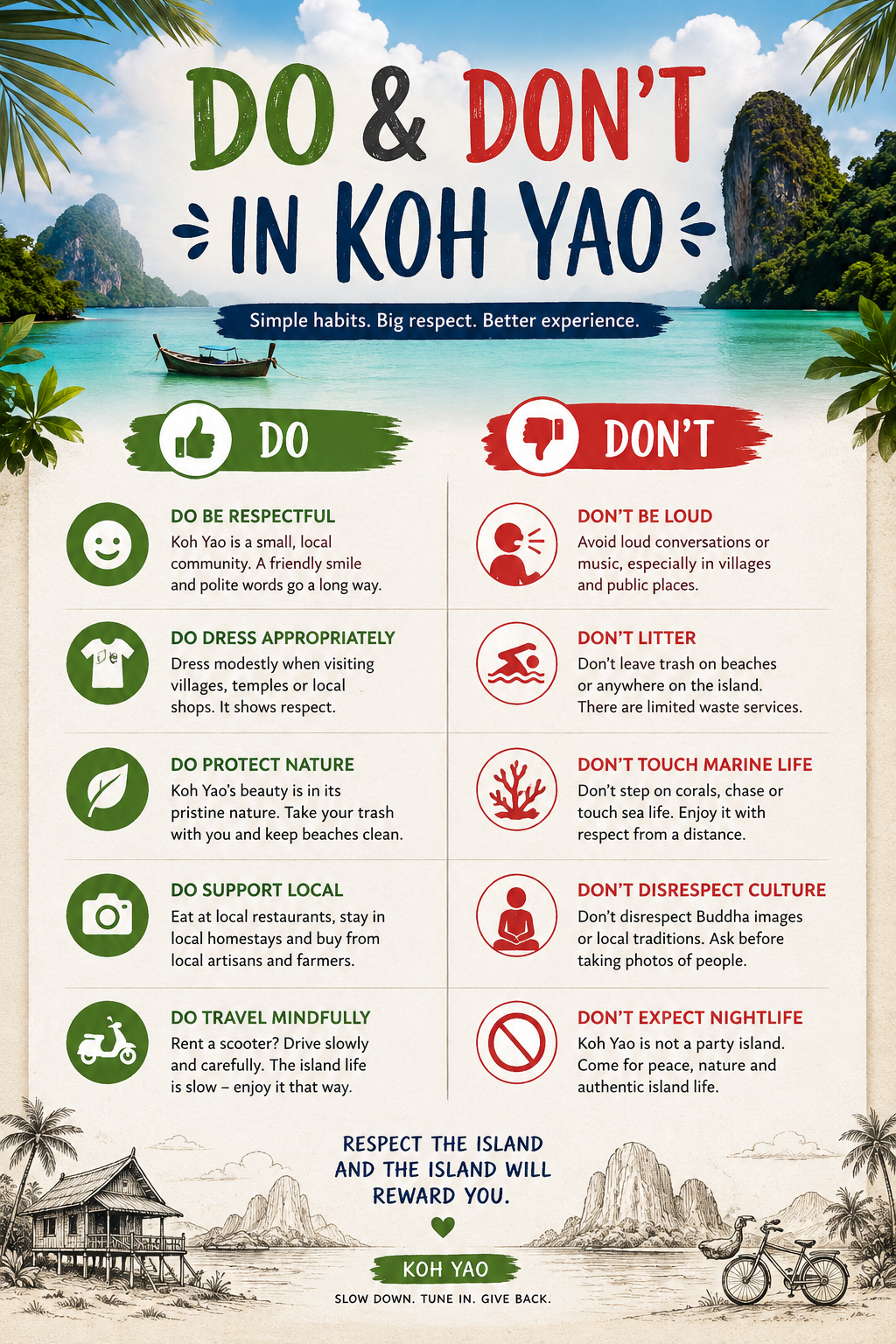
Things You Should Do
- Dress respectfully when visiting villages and religious areas.
- Remove your shoes before entering homes or places where requested.
- Drive slowly and wear a helmet when using a motorbike.
- Choose local guides, restaurants and community activities.
- Carry reusable water bottles and shopping bags.
- Keep a safe distance from coral and marine animals.
- Ask permission before photographing local residents.
- Check tide, weather and boat conditions before sea trips.
Things You Shouldn’t Do
- Do not wear revealing swimwear inside villages.
- Do not make excessive noise late at night.
- Do not touch, stand on or collect coral.
- Do not feed fish, monkeys or other wild animals.
- Do not leave rubbish on beaches or islands.
- Do not fly a drone near people without permission.
- Do not enter private property for photographs.
- Do not assume every beach is safe for swimming at all times.
1. Do Respect Koh Yao’s Local Culture
One of the most important Koh Yao travel tips is to remember that the islands are not simply
tourist destinations. They are home to active fishing villages, farms, schools, mosques and
multigenerational families.
Be polite when travelling through residential areas. A friendly smile and a simple greeting
can create a positive interaction. Learning a few Thai words, such as
sawasdee for hello and khop khun for thank you, is also appreciated.
Don’t Treat Villages Like Tourist Attractions
Avoid walking into private gardens, houses, fishing areas or working farms without an invitation.
Boats, nets, traps and equipment along the shore may belong to local fishermen and should not
be touched or moved.
2. Do Dress Responsibly Away from the Beach
Swimwear is acceptable at beaches and resort swimming pools. However, visitors should cover up
before entering villages, shops, restaurants, local markets or religious areas.
Lightweight shirts, dresses, trousers or shorts of a reasonable length are practical choices.
When visiting a mosque or participating in a community activity, wear clothing that covers the
shoulders and knees unless the host advises otherwise.
Don’t Walk Through Villages in a Bikini or Without a Shirt
Koh Yao has a more conservative atmosphere than major resort areas. Dressing appropriately shows
respect and helps preserve a positive relationship between visitors and the local community.
3. Do Drive Carefully on Koh Yao
Motorbikes are a popular way to explore Koh Yao Yai and Koh Yao Noi, but island roads can include
sharp bends, uneven surfaces, steep sections and animals crossing unexpectedly.
- Wear a properly fitted helmet.
- Carry a valid driving licence accepted in Thailand.
- Check the brakes, tyres and lights before leaving.
- Slow down near villages, schools and markets.
- Avoid driving after drinking alcohol.
- Use extra caution during or immediately after rain.
Don’t Rent a Motorbike Without Suitable Experience
A holiday island is not a safe place to learn how to ride for the first time. Travelers who are
not confident on a motorbike should use a local taxi, songthaew, private transfer or guided island tour.
4. Do Protect Coral Reefs and Marine Life
Boat trips from Koh Yao may include snorkeling, kayaking and island hopping around Phang Nga Bay,
Krabi, Koh Hong, the Khai Islands or Phi Phi. These marine environments are beautiful but highly sensitive.
- Keep your fins and body away from coral.
- Follow instructions from your boat guide.
- Wear a life jacket when required.
- Use a mooring area rather than anchoring on coral.
- Take all rubbish back to the mainland or your hotel.
- Observe marine animals without chasing them.
Don’t Touch Coral or Feed Fish
Coral is a living organism and can be damaged by touching, kicking or standing on it. Feeding fish
also changes their natural behavior and can disturb the balance of the reef ecosystem.
Never collect shells containing living animals, coral fragments, starfish or other marine life as souvenirs.
5. Do Support Locally Owned Businesses
Spending money with local businesses allows tourism income to remain within the island community.
Consider eating at family-run restaurants, hiring a local boat captain, joining a village tour or
purchasing handmade products directly from local craftspeople.
Community activities may include batik painting, traditional fishing demonstrations, cooking classes,
coconut farming and visits to local villages. Choose experiences that treat residents as hosts and
knowledge holders rather than as objects of entertainment.
Don’t Bargain Aggressively
Polite negotiation may be acceptable in certain situations, but arguing over a small amount can be
disrespectful. Ask for the price clearly, confirm what is included and agree before beginning a trip
or service.
6. Do Reduce Plastic and Take Your Rubbish With You
Waste management is more difficult on islands because rubbish must be collected, stored and transported.
Travelers can reduce their impact by refusing unnecessary plastic bags, straws, cups and single-use containers.
- Carry a refillable water bottle.
- Bring a reusable shopping bag.
- Use reef-conscious personal-care products.
- Dispose of cigarette ends properly.
- Separate recyclable waste where facilities are available.
Don’t Leave Anything on the Beach
Fruit peels, tissues and cigarette ends are still rubbish. Pack out everything you bring, especially
when visiting undeveloped beaches or small islands without waste facilities.
7. Do Ask Permission Before Photographing People
Koh Yao offers excellent opportunities for travel photography, from fishing villages and rice fields
to longtail boats and traditional homes. However, local people should not be photographed at close
range without their consent.
Ask before photographing children, fishermen at work, religious activities or people inside their homes.
Respect the answer if someone declines.
Don’t Enter Private Areas for Social Media Content
A scenic viewpoint, wooden pier, rice field or coconut plantation may be privately owned. Do not climb
fences, move signs or enter restricted areas simply to obtain a photograph.
Drone users should also consider privacy, aviation restrictions, wildlife disturbance and any local
permission requirements before flying.
8. Do Observe Wildlife From a Safe Distance
Visitors may encounter monkeys, monitor lizards, birds, goats, buffaloes and other animals while
travelling around Koh Yao. Observe calmly and allow animals enough space to move naturally.
Don’t Feed Monkeys or Approach Wild Animals
Feeding wildlife can make animals dependent on visitors and may encourage aggressive behavior.
Keep food secured, avoid direct eye contact with monkeys and never attempt to touch or pose with a wild animal.
When joining an animal-related activity, select an operator that prioritizes animal welfare and does
not force animals to perform unnatural behavior.
9. Do Respect Koh Yao’s Peaceful Atmosphere
Many travelers choose Koh Yao because it is quieter than Phuket, Phi Phi or other major tourist
destinations. Keep music and conversations at a reasonable volume, particularly near homes and after dark.
Don’t Expect a Large Party Scene
Koh Yao is better suited to slow travel, nature, family holidays, local experiences and relaxing
evenings. Visitors looking for large nightclubs and all-night beach parties may find other destinations
more suitable.
Alcohol may not be available at every restaurant or local shop. Never pressure a business to sell or
serve something that it does not normally offer.
10. Do Check the Weather, Tides and Boat Conditions
Conditions in Phang Nga Bay can change, particularly during the monsoon period. Rain, wind, waves and
tides may affect boat departures, snorkeling visibility, beach access and kayaking routes.
- Confirm your boat departure before travelling to the pier.
- Listen to the captain when plans must change.
- Use dry bags for phones, passports and valuables.
- Tell the operator about children, elderly travelers or medical concerns.
- Do not swim when currents or waves appear unsafe.
Don’t Pressure a Captain to Travel in Unsafe Conditions
A route may be changed or cancelled for safety reasons. The sea can look manageable from shore while
conditions farther offshore are significantly stronger. Follow the judgment of experienced local captains.
How to Be a Responsible Visitor in Koh Yao
Responsible travel does not require complicated rules. It means considering how your clothing, transport,
purchases, photographs and waste affect the people and environments around you.
Travel slowly, speak politely and support businesses that respect the community. The best visitors leave
Koh Yao with memorable experiences while leaving the island’s beaches, villages and marine habitats in
the same or better condition.
Frequently Asked Questions About Do and Don’t in Koh Yao
What should tourists wear in Koh Yao?
Casual tropical clothing is suitable, but visitors should cover their swimwear before entering villages,
restaurants, markets and religious areas. Clothing covering the shoulders and knees is recommended when
visiting a mosque or joining a community activity.
Can tourists drink alcohol in Koh Yao?
Alcohol may be available at some resorts, bars and restaurants, but not every local business serves it.
Drink responsibly and respect businesses or community areas where alcohol is unavailable or inappropriate.
Is it safe to ride a scooter in Koh Yao?
Riding can be safe for properly licensed and experienced drivers who wear helmets and drive cautiously.
Travelers without motorbike experience should use local taxis or private transport instead.
Can visitors wear bikinis on Koh Yao beaches?
Bikinis and normal swimwear are generally appropriate at beaches and resort pools. Visitors should cover
up before walking through villages or entering shops, restaurants and public community areas.
Is it acceptable to photograph local people?
Ask permission before taking identifiable photographs of residents, particularly children, fishermen,
religious activities and people inside private homes or workplaces.
Can tourists feed fish while snorkeling?
No. Visitors should not feed fish, touch coral, chase marine animals or collect living shells and coral.
Observe marine life without interfering with its natural behavior.
Final Thoughts
Following these do and don’t in Koh Yao will help protect the qualities that make the
islands special: welcoming communities, peaceful villages, traditional livelihoods and beautiful marine scenery.
Respect local customs, travel safely, reduce waste and support responsible local businesses. In return,
Koh Yao offers an authentic island experience that feels very different from Thailand’s busier tourist destinations.
See also: